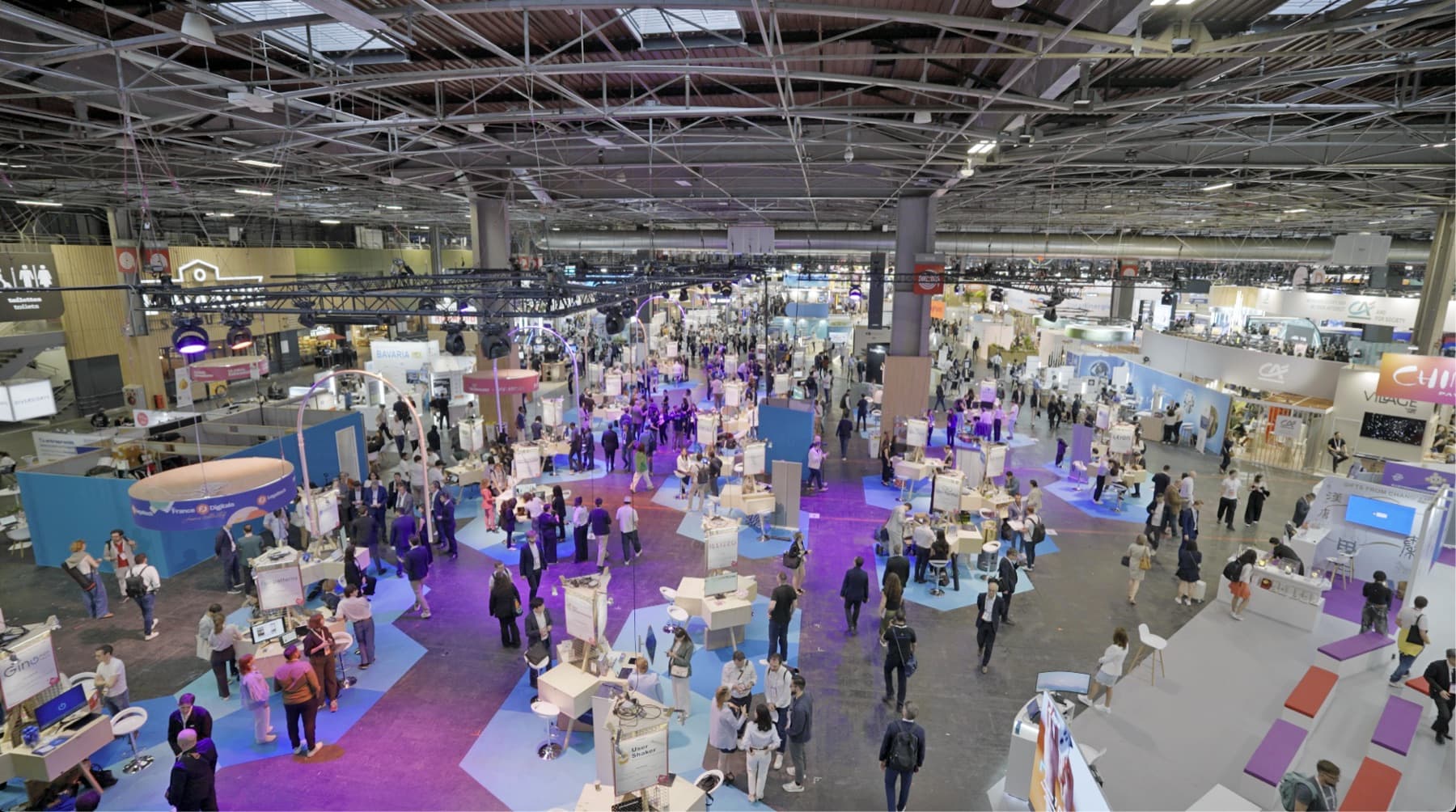
Standing out at a crowded trade show.
Hundreds of stands, all well built, all brightly lit. The real challenge isn't being visible. It's being seen, remembered and chosen long after the lights have gone out.
A trade show isn't won over 3 days.
It's won over 3 phases.
You arrive. Hundreds of stands, one after another, all well built, all brightly lit, all buzzing. Your visitors walk fast, barely look, remember even less. In the end, 80% of the business cards exchanged will come to nothing, not for lack of interest, but for lack of follow-up.
The real challenge isn't being visible. It's being seen, remembered and chosen, long after the lights have gone out.
That is exactly what we work on: a set-up designed over three phases, not three days.
Exist before anyone approaches you.
In a crowded hall, a visitor scans — they don't read. Your stand has to be recognisable from a distance, before any logo can be read or any text deciphered. Your visual signature speaks first: dominant colour, shape, height, light. A consistent visual language, carried from your website through to your stand, halves the cognitive effort visitors need to identify you, and doubles your stop rate.
Qualified visitors are not met by chance. They are planned for. A successful show starts three to six weeks before it opens: targeted invitations, meetings booked in advance, LinkedIn teasers, expert content published in the preceding weeks. Exhibitors who neglect this phase are counting on luck, and get what luck gives.
The benefit: being found without having to shout.
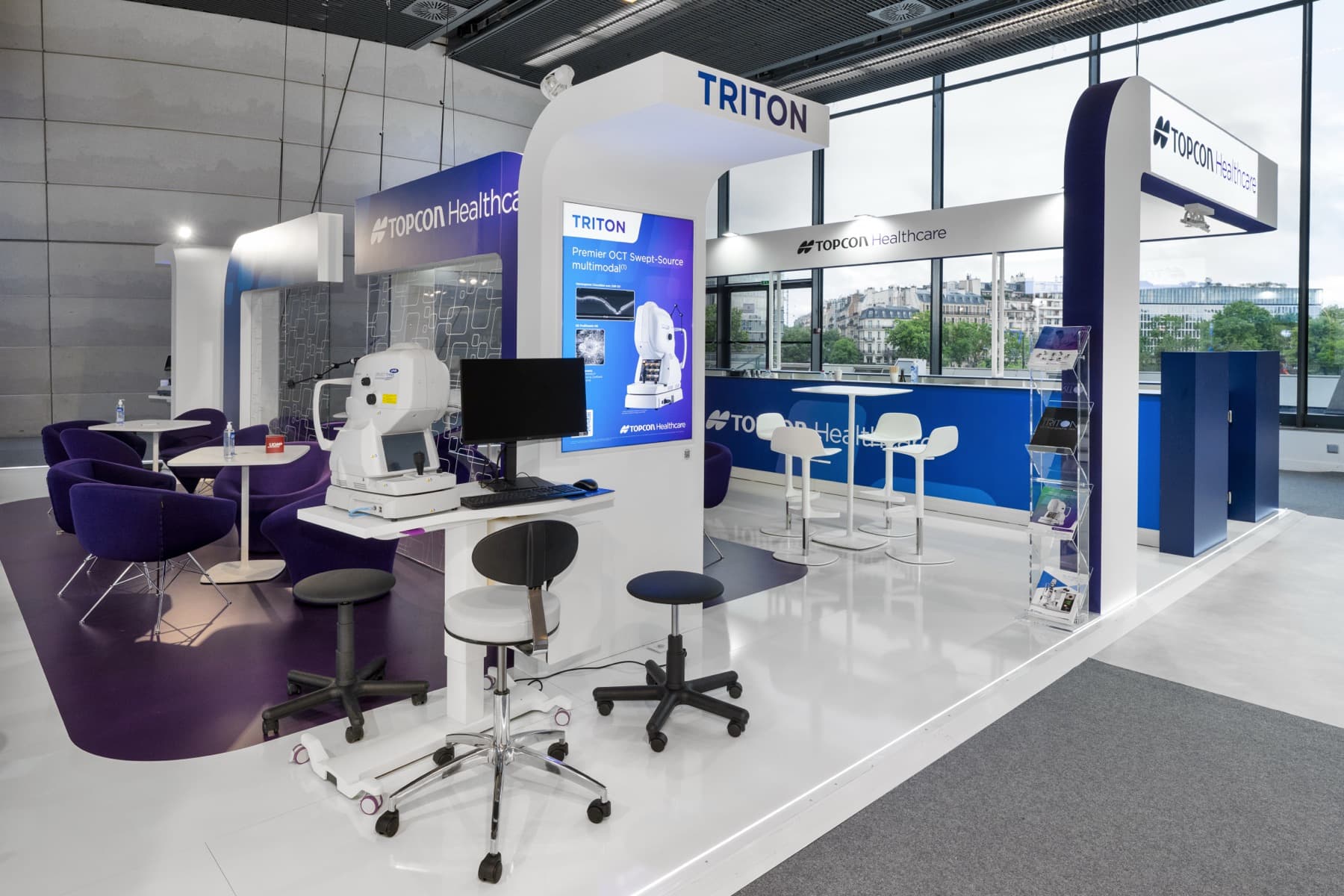
Your location isn't a constraint you endure, it's a strategic variable.
Next to the entrance, facing a competitor, near a break area, on a main aisle: negotiating it early wins you significant walk-up traffic without spending an extra euro on activations. But the location isn't just about capturing footfall. It shapes the concept itself.
“The stand design wasn't focused solely on presenting the products; it was also something we worked on together, to keep all the benefits of the natural daylight our location gave us.”
For the SFO at the Palais des Congrès de Paris, choosing a premium location bathed in natural light, with an open view over Paris, gave rise to a concept built on transparency, both narrative and material. The design intentions were born from those conversations.
Give visitors a reason to stop, then to stay.
A stand that displays products turns heads. A stand that tells a story keeps people there. The difference is measured in seconds spent on site: 8 seconds for a showcase stand, 3 to 7 minutes for a narrative stand.
Tell a story, don't just display
From showcase to narrative
A stand that displays products turns heads. A stand that tells a story keeps people there. Those minutes are where real opportunities are born.
Create a sensory experience
Not a stage set
The eye tires quickly at a trade show. Engaging another sense (sound, touch, taste, gesture) creates a break that sticks in the memory: secondary signals are remembered when everything else is forgotten.
Make visitors take part, not just watch
The visitor as a participant
A hands-on demonstration, a personalised assessment, a short workshop, a positioning mini-game: any mechanic that turns the visitor into a participant triples the quality of the contact that follows.
Invest in the team as much as the stand
The team converts
The most beautiful stand at the show, poorly staffed, becomes invisible. A trained, briefed team aligned on the message is worth more than an LED wall. It is the team that turns a glance into a conversation.
The benefit: being remembered for what was experienced, not for what was said.
Turning an exhibition cost into a commercial asset.
This is where it's all won or lost. And this is where most brands give up.
Qualify on the spot, not afterwards
While it's hot, not cold
One contact qualified on the spot is worth ten qualified after the event. A tag, a 15-second voice note, an interest level, a next action: every visitor leaving the stand must be categorised before they disappear into the crowd.
Follow up within 48 hours, personally
The right timing, the right message
A standardised email sent a week after the show gets next to no response. A personalised message that recalls a specific detail, sent within 48 hours, makes a follow-up five times more likely.
Turn the visitor into an ambassador
The ripple effect
The best amplifier of your trade-show presence is not your paid-media budget — it's the visitor themselves. A photo, a piece of content, a testimonial they want to pass on: every successful interaction can generate 3 to 10 new contacts through a ripple effect.
Measure to learn, not to reassure yourself
Every interaction, a data point
Without figures, your next show will be decided on gut feeling, and will repeat the same mistakes. We favour activations with a built-in capture mechanism: a game, an assessment, a demonstration, a prize draw. Every interaction becomes a qualified data point.
The benefit: turning an ephemeral event into a measurable sales pipeline.
A stand is won over 3 phases.
Not over 3 days.
Rebalancing is simple to describe, demanding to deliver.
Before
Lay the groundwork
Plan the footfall and the message, not just the stand. Return on investment is won before the doors open.
During
Make it an experience
Bring it to life, don't just put it on show. What is experienced is remembered. What is displayed is forgotten.
After
Put it to work and learn
Put it to work, measure, come back stronger. The loop that separates brands that improve from those that simply repeat themselves.
Frequently asked questions about the Full Experience method
Let's talk before the schedule is locked in.
The best editions are won in the weeks leading up to the show. A one-hour conversation is usually enough to scope a project, and to see whether we're a good fit.